Sunday, April 1, 2012

U.S. Nuclear Arsenal Doesn’t Need Tests to Deter Enemies

Nuclear Arsenal
Illustration by Bloomberg View
It’s horrifying even to imagine the U.S. finding itself in a position where it must use an atomic bomb against an enemy. However, in the event such a crisis occurs, we must be certain the weapon will work.
Equally important, the main purpose of the U.S. nuclear- weapons program today is to provide a deterrent against potential threats, and that can only be achieved if we are confident in our stockpile and aware of the risks we face around the world.
Fortunately, as a report from the National Academy of Sciences last week helped make clear, there is a way to improve security on both fronts: ratifying the Comprehensive Nuclear Test Ban Treaty.
The CTBT, which bans all tests of nuclear weapons, was adopted by the United Nations General Assembly in 1996, and President Bill Clinton was the first world leader to sign it. It was shelved, however, by the Republican-held Senate in 1999, over some legitimate concerns: that computer modeling alone might not ensure the integrity of the U.S. stockpile, and that global monitoring systems were not up to the task of detecting explosions around the globe.
But the world has changed. Seismic science has advanced tremendously -- North Korea’s very low-yield underground tests in 2006 and 2009, for example, were picked up by South Korean, American and other detection systems. The CTBT calls for an international web of 321 monitoring stations and 16 radionuclide laboratories, which is about 75 percent complete.
As for maintaining our arsenal, the U.S. has not seen the need to conduct a test since 1992. Last week’s report stated that the U.S. is “now in a better position than at any time in the past to maintain a safe and effective nuclear weapons stockpile without testing and to monitor clandestine nuclear testing abroad.”
It’s simply hard to see how ratifying the treaty and pushing for its global adoption would harm U.S. interests. And, if it did, the treaty has an opt-out clause in cases of “supreme national interest.”
The more pertinent objection is that it would do little to curb the behavior of rogue states, which are unlikely to join the treaty or to abide by it if they did. (In fact, as written, the pact cannot even go into full force unless Iran and North Korea, among others, ratify it.) Nonetheless, the U.S. signing on would further isolate bad actors in world opinion and engender goodwill for the increasingly promising American effort to curb Iran’s nuclear efforts. Also, China has indicated it will follow the U.S.’s lead on the issue, and Senate ratification might help tame the arms race (and accusations of U.S. hypocrisy) among other budding nuclear powers such as India and Pakistan, neither of which has signed the CTBT.
How could the Barack Obama administration gather the necessary 67 Senate votes? First, by pointing out that such Republican luminaries as former Secretary of State George Shultz, former National Security Adviser Brent Scowcroft and former Secretary of Defense Robert Gates have all said that approving the treaty now makes sense. Second, it could commit to several crucial recommendations of the National Academy of Sciences report -- improving U.S. global monitoring systems, maintaining a strategic computing capability and pledging to finance nonexplosive testing in hydrodynamics, radiography and fusion technology.
The White House could also make some deals. One option is making military’s new F-35 fighter capable of carrying a nuclear payload. (Although we would like to see the now-scaled-back F-35 program killed for budgetary reasons, if it is to be produced, it should become a factor in our deterrent strategy.) Another is to resume the now-shelved Reliable Replacement Warhead project, which would create a simpler, next-generation warhead without resuming nuclear testing.
Ratifying the CTBT, further diversifying the U.S. nuclear program and developing a more reliable warhead would not just make America more secure, they would be part of a broader strategic goal we have endorsed: shifting our deterrent capacity away from Cold-War-legacy ballistic missiles and toward a smaller, smarter tactical arsenal adapted to the threats we face in the 21st century.
Read more opinion online from Bloomberg View.
Today’s highlights: The View editors on why the U.S. should ratify the nuclear-test ban and regulate money-market funds. William D. Cohan on the government hiding public information on banks. Albert R. Hunt on murder in New Orleans. Charles Dumas on why the euro should be abandoned, and Charles Wyplosz on why the euro should be kept.
To contact the Bloomberg View editorial board: view@bloomberg.net.

http://www.bloomberg.com/news/2012-04-01/u-s-nuclear-arsenal-doesn-t-need-tests-to-deter-enemies.html

Friday, March 30, 2012

Japan Fukushima Nuclear Zone Partly Opened For First TimeShare on Google+ Japan Fukushima Nuclear Zone Get World Alerts: Sign Up Follow: Japan Earthquake, Japan, Japan Tsunami, Video, Fukushima, Japan Fukushima, Japan Fukushima Nuclear Zone, Japan Nuclear Zone, World News TOKYO — Japan is letting up to 16,000 people back into their homes around its leaking nuclear power plant, easing restrictions in the no-go zone for the first time !

TOKYO — Japan is letting up to 16,000 people back into their homes around its leaking nuclear power plant, easing restrictions in the no-go zone for the first time since last year's disasters.
They won't be allowed to stay overnight, some must wear protective gear, and it's unclear how many will return at all, but the step is crucial to permanently resettling towns vacated since the the March 11, 2011, earthquake and tsunami devastated the Fukushima Dai-ichi plant and caused meltdowns in three of its reactors.
A 20-kilometer (12-mile) zone around the plant has been off-limits to about 100,000 residents for more than a year because of radiation contamination. But the plant was declared stable in December, with leaks substantially subsiding, and that let officials focus on how to clean up the contamination and allow some people to return.
On Friday, the government said it was rearranging the evacuation zone based on three categories of contamination, rather than by distance. The strict perimeter was long criticized as an inexact measure of safety, as radiation levels varied widely in the area and some hotspots existed outside the area.
The change affects three of the 11 municipalities inside the former evacuation zone.
"The reorganization would be the foundation for the reconstruction of the affected towns. We will thoroughly discuss how we can best accommodate their needs," said Economy and Trade Minister Yukio Edano, who announced the step late Friday.
Starting Sunday, Tamura will allow all residents to visit their homes part-time without protection or permission – but not sleep there just yet, and the town of Kawauchi will allow residents to visit, though they must wear protective gear in some areas.
Areas of Minamisoma fall into all three categories of contamination, but the town will allow residents to visit their homes in the least contaminated areas in mid-April. Residents in the least contaminated areas will be allowed to return permanently following further decontamination efforts.
Kawauchi mayor Yuko Endo welcomed Friday's announcemet and told public broadccaster NHK that, "The revision comes at a right time just as the town tries to rebuild and reborn."
He said however, that residents have a right to choose whether or not to return to their homes right away.
The town office had moved to another part of Fukushima prefecture but moved into a part of Kawauchi just outside the evacuation zone earlier this month to help smooth the process of residents' returning.
While the reclassification means about 16,000 people can return home fairly soon, it's not clear how many will. Most are waiting until the area is further decontaminated and infrastructure restored, and local officials have said towns may lose unity due to the three-way divisions.
Under the revised evacuation plans, areas with annual exposure levels estimated at 20 millisieverts or below are deemed safe for people to visit and prepare for their permanent return, while being encouraged to make further decontamination efforts. Limited access is allowed for residents in areas with higher contamination – up to 50 millisieverts of estimated annual exposure. Places with annual exposure estimates exceeding that will remain off-limits.
Despite the government declaration that Fukushima Dai-ichi is stable, the plant is largely running on makeshift equipment and remains vulnerable. Officials have said that it would take up to 40 years to fully decommission the highly contaminated plant that has three reactors with melted cores.
Decontamination efforts also are uncertain. Experts have said there is no established method, and more highly contaminated areas are difficult to clean up.
Environment Minister Goshi Hosono, also the nuclear crisis management minister, said Friday that containing radiation release and keeping the plant stability is crucial to the return of affected residents.
(This version CORRECTS that 11 municipalities are affected total, not 11 now in lower classification.)
Earlier on HuffPost:


Corbin & The Great Peace March @ NTS,NV

  • When the Great Peace March, came to the NV Test Site
  • Corbin Harney & to the right Bill Roose
  • Carefree days, we thought we would change the world, but we got changed!

Thursday, March 29, 2012

Iran could recover from attack on its nuclear sites


Iran could recover from attack on its nuclear sites within six months, says U.S. report

U.S. congressional report says Israel and U.S. do not know exact location of Iran nuclear facilities, which may be dispersed in such a way that an Israeli attack would not be successful.

Iran could probably rebuild most of its centrifuge workshops within six months after an attack on its nuclear sites, according to a new report by U.S. congressional researchers, Bloomberg reported on Wednesday.
The report by analysts at the Congressional Research Service, citing interviews with current and former U.S. officials, said that the Islamic Republic’s centrifuge “workshops” are widely dispersed and hidden, which could complicate a potential Israeli military strike.
bushehr - Reuters - December 9 2010 Iran’s Bushehr nuclear power plant.
Photo by: Reuters
According to the report, neither Israel nor the U.S. knows for certain where Iran’s nuclear facilities are located and the possibility of dispersed nuclear sites makes any assessment of a military strike’s success more difficult. It is “unclear what the ultimate effect of a strike would be on the likelihood of Iran acquiring nuclear weapons,” Bloomberg quoted the report as saying.
The congressional researchers said that, “An attack that left Iran’s conversion and centrifuge production facilities intact would considerably reduce” the time Iran would need to resume its nuclear activities.
Moreover, the researches quoted a former U.S. official as saying that Iran could probably replicate most of its centrifuge workshops within six months.
The International Atomic Energy Agency has recently voiced “serious concerns” about possible military dimensions to Iran’s nuclear activities.
Iran denies suspicions that it is covertly seeking nuclear weapons capability, in part by coordinating efforts to process uranium, test high explosives and revamp a ballistic missile cone to accommodate a nuclear warhead.

http://www.haaretz.com/news/diplomacy-defense/iran-could-recover-from-attack-on-its-nuclear-sites-within-six-months-says-u-s-report-1.421344

Wednesday, March 28, 2012

Is This More-Dangerous-than-Aspartame Sweetener Hiding in Your Food?

Is This More-Dangerous-than-Aspartame Sweetener Hiding in Your Food?

By Dr. Mercola
One of the more recent toxic additions to our food supply is the artificial sweetener called Neotamei.
In the European Union, where it was approved as a flavor enhancer as of November 2010, it is known by its “E number,” E961ii.
Made by NutraSweet (a former division of Monsanto and the original manufacturer of aspartame), neotame is 13,000 times sweeter than table sugar, and about 30 times sweeter than aspartame.
It’s based on the aspartame formula—despite the fact that 80 percent of all FDA complaints pertain to adverse reactions from aspartame.
Neotame is essentially aspartame plus 3,3-dimethylbutyliii--the presence of which ends up reducing the production of phenylalanine, which allegedly makes it safe for those suffering from phenylketonuria (PKU).
(Hence neotame does not need to bear a PKU warning label like aspartame.)
Unfortunately, it may actually be an even more potent and dangerous neurotoxin, immunotoxin and excitotoxin than aspartame.
Proponents of neotame claim that increased toxicity is of no concern because less of it is needed to achieve the desired effect.
Still, Monsanto's own pre-approval studies of neotame revealed adverse reactions, and there were no independent studies that found neotame to be safe.
On August 16, 2000, the law firm of Hartman & Craven filed comments on the neotame docket pertaining to the lack of safety data submitted in support of neotameiv, stating in part:
“A food additive petition has been submitted to the FDA for the artificial sweetener neotame. In that petition, the sponsor claims the data presented demonstrate that the compound produces no adverse effects at a dose of 1000 mg/kg/day in the rat. The sponsor also claims that the product should be safe for patients with diabetes. A review of the data submitted to the FDA does not support these conclusions.
In fact, no safe human usage level can be determined based on the submitted data. The animal experimental evidence indicates a toxic effect on growth. The clinical evidence raises concerns about glucose control in patients with diabetes.
Searches for an explanation resolving the adverse findings leave no clear acceptable answers that would insure the safety of the public but does stimulate speculation on questions relating to possible liver effects.”

Is Neotame Allowed in Organics?

While some writers have made the claim that neotame is allowed in organic foods, there does not appear to be any supporting evidence for this. Ditto for the rumor that it doesn’t have to be listed on the label. For example, according to a recent article on Sott.netv:
“Neotame was approved by the FDA for general use in July 2002 ... The FDA loosened all labeling requirements for Neotame as part of a large-scale effort to make it a near-ubiquitous artificial sweetener, to be found on the tabletop, in all prepared foods, even in organics. It simply does not have to be included in the ingredient list.”
The Cornucopia Institute wrote a rebuttal to this internet rumor last year, statingvi:
“Organic foods cannot contain synthetic additives, unless these additives have been petitioned and approved to appear on the National List of Approved and Prohibited Substances (7 CFR 205.605). Emily Brown Rosen, Standards Specialist at the USDA’s National Organic Program, writes about neotame: “For organic food, all additives must appear on the National List.” Neotame has never been petitioned or approved for inclusion on the National List, and therefore cannot legally be added to organic foods.
We see no evidence, and see no reason to suspect, that any organic certifying agents would allow organic food manufacturers to violate the federal standards by adding this synthetic sweetener.
Moreover, as a direct food additive, neotame must be listed on the ingredients label, contrary to suggestions that this could be added to food in a stealth-like manner (21 CFR 101.100). We have not seen any evidence to suggest that neotame is being added covertly to organic foods. Not only would organic manufacturers be breaking the law by adding this synthetic sweetener to organic foods, they would also be breaking the law by not including Neotame on the ingredient label.”

Why is Neotame Dangerous?

That said, my recommendation for neotame is similar to that for aspartame, which is: avoid it at all costs if you care about your health. Neotame is like aspartame on steroids, so while you want to avoid both, neotame appears to be more toxic. One way of avoiding all artificial sweeteners is to purchase foods bearing the USDA 100% Organic label. I don’t believe there’s any reason to suspect organic foods will contain neotame.
I’ve previously expounded on the many health dangers of aspartame, and all of those dangers apply equally to neotame. But as if aspartame wasn't bad enough, NutraSweet “improved" the aspartame formula by adding 3,3-dimethylbutyraldehyde, which blocks enzymes that break the peptide bond between aspartic acid and phenylalanine, thereby reducing the availability of phenylalanine. This eliminates the need for a warning on labels directed at people who cannot properly metabolize phenylalanine.
Neotame is also more stable at higher temperatures than aspartame, so it’s approved for use in a wider array of food products, including baked goods.
However, one of the byproducts your body creates by breaking down aspartame is formaldehyde, which is extremely toxic to your health even in very small dosesvii. Furthermore, in a search of PubMed.gov, the U.S. National Library of Medicine, which has over 11 million medical citations, neotame fails to include any double-blind scientific studies on toxicity in humans or animals. If neotame was indeed completely safe to ingest, you would think the NutraSweet Company would have published at least one double-blind safety study in the public domain?
Well, they haven't... Why not?
In and of itself, 3,3-dimethylbutyraldehyde is categorized as both highly flammable and an irritant, and carries risk statements for handling including irritating to skin, eyes and respiratory systemviii. Does this sound like something that belongs inside your body?

How Did these Chemicals Get Approved for Human Consumption?

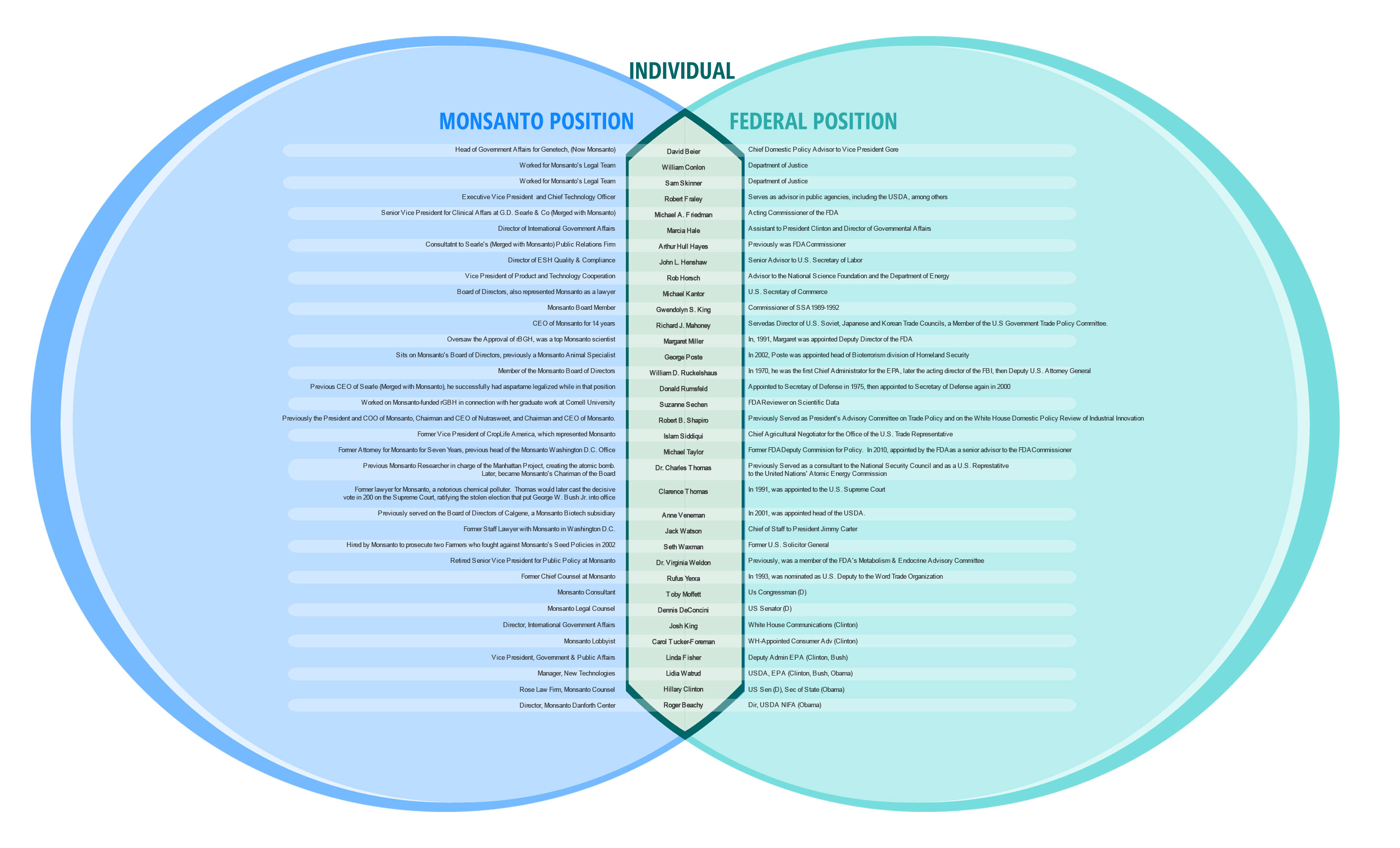
Today, the US Food and Drug Administration (FDA) could rightfully be accused of being a “subsidiary" of the Monsanto Company. When you realize just how many Monsanto executives and employees who have migrated into positions of power within the FDA and other government agencies, a truly disturbing picture emerges of the foxes guarding the henhouse.
The FDA is packed by pro-business, pro-corporation advocates who often have massive conflicts of interest when it comes to protecting the health of the public. In fact, the revolving door between private industry and government oversight agencies is so well established these days, it has become business as usual to read about scandal, conflicts of interest and blatant pro-industry bias, even when it flies in the face of science or the law.